What is Centre for Text Margins?
journal |Centre for Text Margins bridges writing, reading, and text design from within Aalto University. We read the world through a typographic lens and invite you to engage with the materiality of language, whether you are a designer, writer, or reader.
In fact, most people are all of those without noticing.
Knowledge and skill concerning the visual form of texts is called typography. Typography is a meticulous practice in which attention is given to every letter and punctuation mark, as well as to the spaces between them and the margins that surround them. Beyond precision, typographic expertise is an interwoven body of skills and knowledge: the tools and technologies of writing, the nuances of languages and cultures, the conventions of different genres, and the principles of visual perception. Centre of Text Margins specifically refer to these skills and knowledge more broadly as text design. Text design is, in our view, an aspect of writing, and typographic knowledge is an essential part of a larger ecosystem of diverse text environments and writing and reading practices.
Centre for Text Margins aims to bring design and writing, designers and writers, closer to each other. We are particularly committed to developing typographic practices in areas that might otherwise remain hidden in the margins. The Centre’s name is an obvious worldplay that aims to shed light on hidden phenomena, namely two interonnected ones:
1) the literal margins, and
2) marginal texts.
The first reference is to the literal margins surrounding texts, an acknowledgement of the empty space that few people beyond designers really think about, but which makes typographic form possible, and with it an entire notion of the materiality of written language. The empty spaces that remain around and inside texts have a significant impact on reading and comprehension. This is particularly noteworthy as the traditional linear form of long texts is becoming almost secondary as a mode of reading. In the age of digital and dynamic text, reading isoften fragmented. We want to take part in sketching conceptual and concrete tools for making sense of this phenomenon.
Second, we also bring attention to more conceptual margins: writing and reading practices considered unconventional, where design takes on a central role. Everyday life runs mostly on conventional text genres that are recognised precisely for their ordinariness, and it is, in fact, best for some texts to remain unremarkable in their design. By contrast, text design becomes especially prominent in “marginal” text genres, the nature of which can be diverse: in both plain-language texts and experimental writing, visual form becomes an essential part of how content is interpreted. Paradoxically, then, accessible news and experimental contemporary poetry share a feature: they engage the reader most effectively not only through their language but also through their design.
Centre for Text Margins draws illegibility and accessibility together under the spotlight to show that these apparent opposites share something in common: at the margins of what we understand as linear and conventional text, textual conditions are nonlinear and diagrammatic, spatially organised.
The idea of anchoring a center for text design particularly at Aalto University builds on the school’s decades-long history and expertise in teaching typography in higher education. Historically, in typography, skills and knowledge have typically accumulated through hands-on training and then dispersed into practice without being shared much beyond the circle of practitioners. In Finland and in many other countries, there has been a lack of institutions dedicated to disseminating and developing this expertise within a more conceptual framework. Our Centre aims to do exactly that, while continuing to value practice-led knowledge and the cultivation of skill.
This is why, from 2025 to 2028, the Centre will offer three professionals in text design or writing a year-long working residency at Aalto University: an opportunity to deepen and develop an independent practice in dialogue with the academic community and free from the set of constraints of commercial work. Even internationally, such opportunities for designers are exceedingly rare, despite an urgent need to produce new knowledge. This residency is made possible by the Kone Foundation. Read more about our first designer-writer in residence, Heikki Lotvonen.
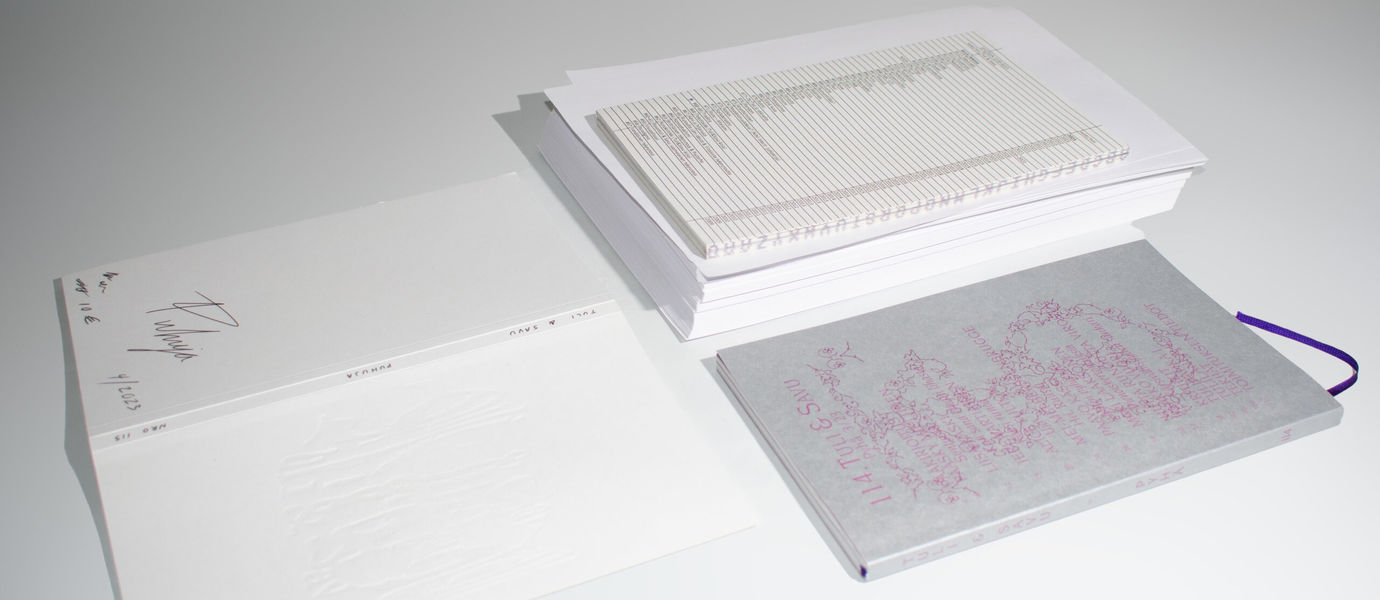
Aalto University’s Visual Communication Design major has a long and distinguished history, and text design projects in the recent history have explored both “sides” of the unconventional “margins.” We have probed the possibilities of both experimental writing and accessible, plain-language text. The major also has a long-standing collaboration with Finnish contemporary poetry: since 2003, students have designed the layout of every issue of the poetry magazine Tuli & Savu. Over the years, the magazine’s design has received numerous awards and recognitions in both design and cultural publishing. Generations of designers have shaped the pages of Tuli & Savu, with teaching and supervision over the years by faculty members Tapio Vapaasalo, Saku Heinänen, Arja Karhumaa, Penni Osipow, and Tuomas Kortteinen.
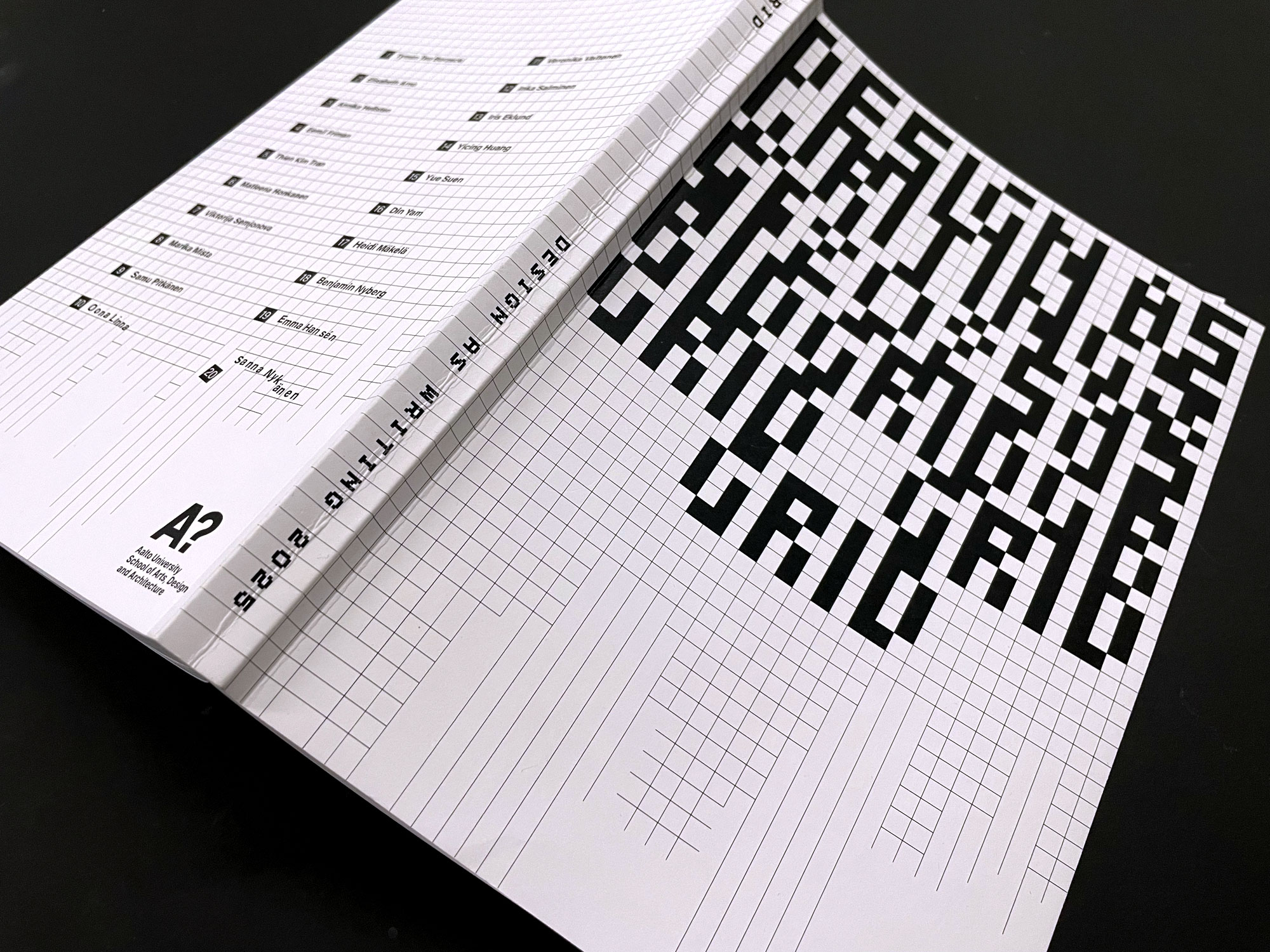
In 2019, Professor Arja Karhumaa founded the course Design as Writing, in which master’s students annually explore the materiality of written language in playful and creative ways. The course builds graphic designers’ confidence in working with text by unsettling conventional distinctions between text and image, and by questioning the origins and authorship in typographic writing. Concepts and methods borrowed from experimental literature, such as conceptual poetry and procedural writing, are inspiring to designers because they foreground the materiality of text and challenge assumptions about what it requires to produce text. Many students discover a new way to make text an integral part of their design practice, and many also find the confidence to develop their own voice as writers. Each year, the students’ experimental writing projects are compiled into a book, and these books are held in the archive of the Centre for Text Margins.
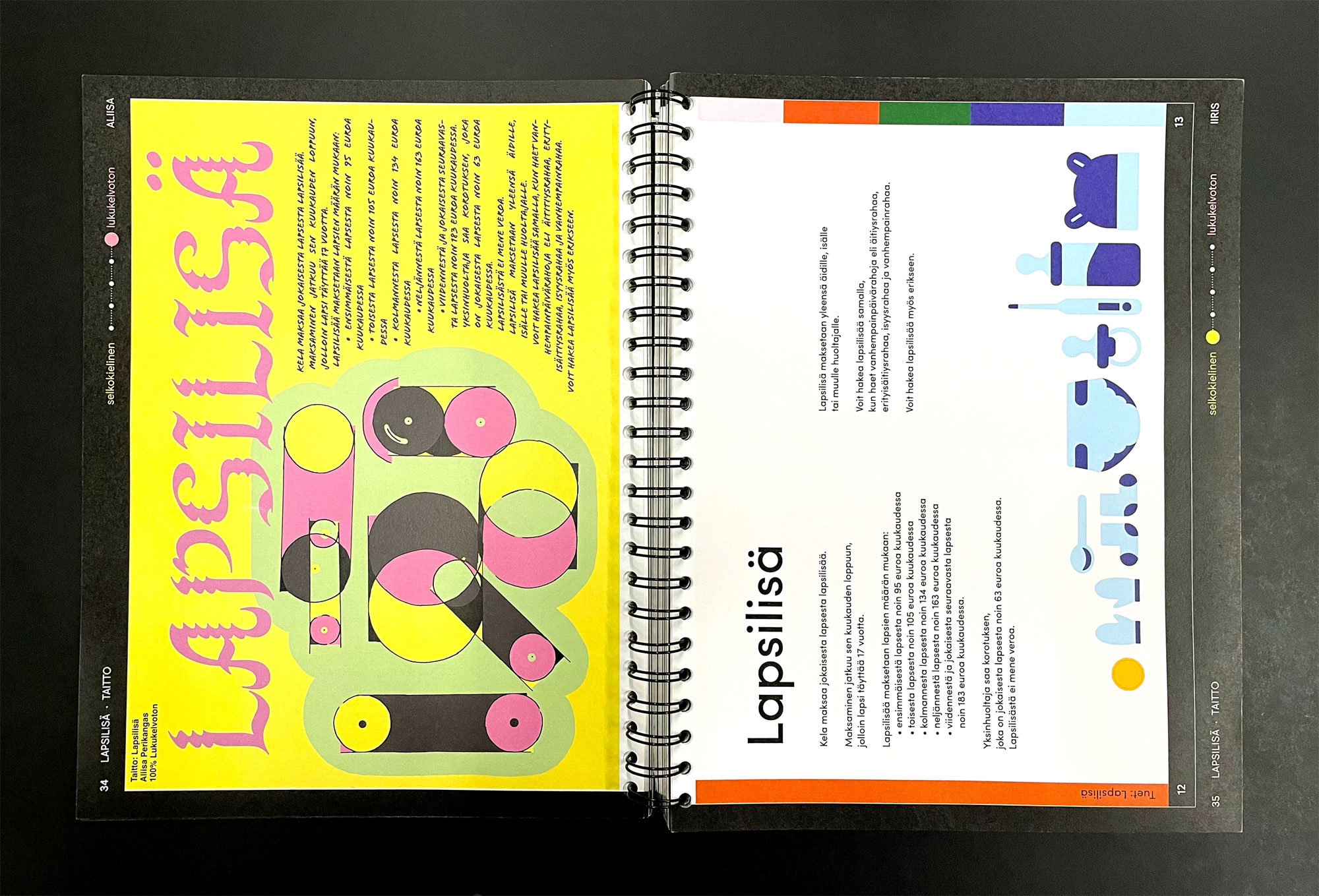
At Aalto University, our approach to accessibility of written language is likewise experimental and seeking new knowledge. In 2021, Visual Communication Design students carried out a collaborative project with the Finnish Centre for Easy Language (Selkokeskus) and Kela, the Social Insurance Institution of Finland, titled Accessible Form – Experiments in Easy Language Visual Communication. The project was not a conventional commission but literally a series of experiments using Kela’s easy language information texts. We probed the limits and properties of accessibility with a unique approach, creating multiple parallel versions of each text – from the most accessible to the most illegible. The experiments also addressed different aspects of textual vs. pictorial expression in plain-language communication. All the experiments were compiled into a catalogue which can be found in our archive. At Aalto University, the project was led by Arja Karhumaa, Penni Osipow, and Johanna Bruun.
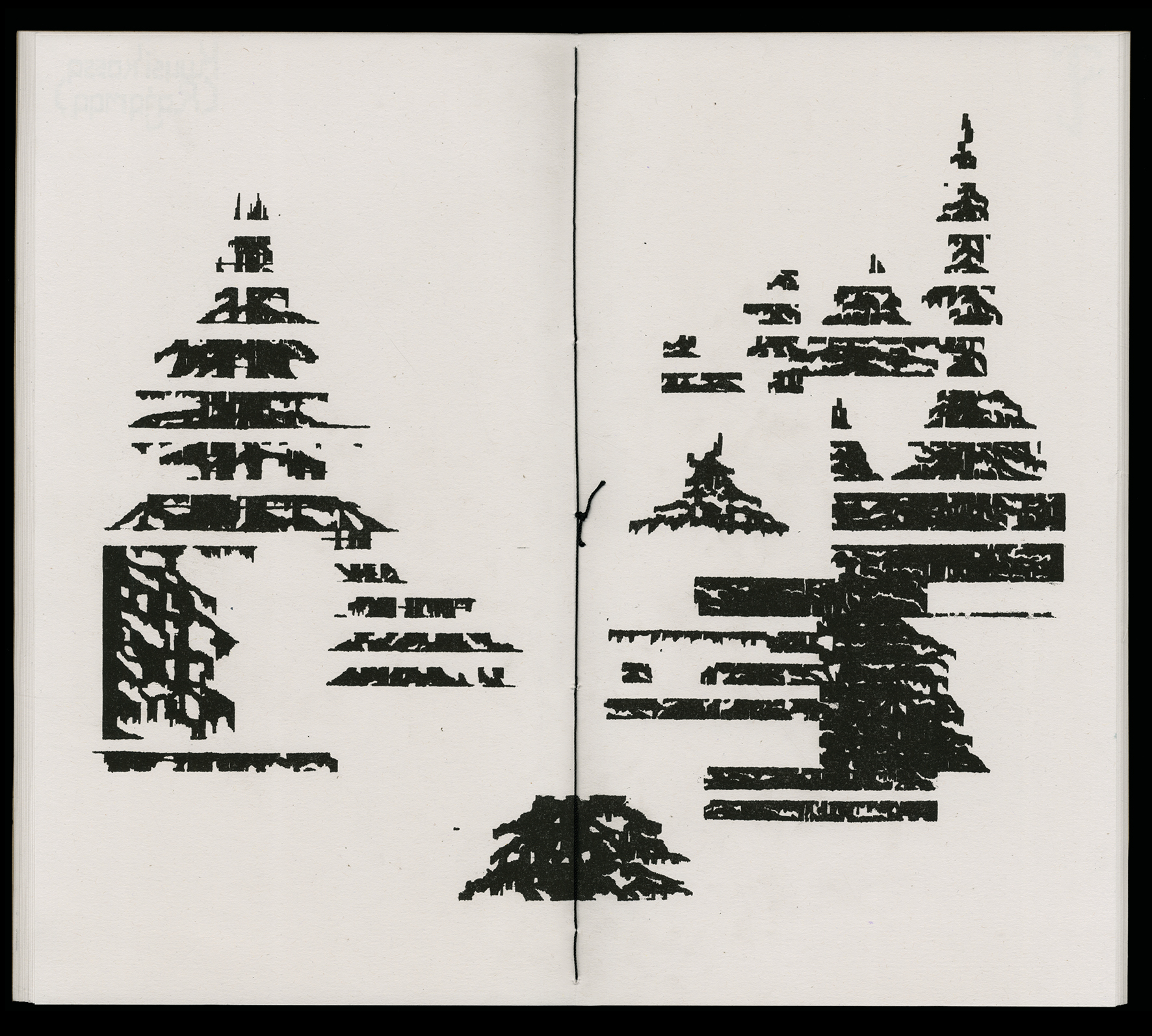
Across the Visual Communication Design curriculum, experimentation is encouraged to help students find their own points of reference and interests as designers, and to pursue a place in the world for their design practice. Many students have also pushed the boundaries of text design in the artistic components of their theses. For instance, Aliisa Perikangas, who now works at the Centre for Text Margins, created Puiden ääriltä (“From the Edges of Trees”, 2023), an artist book of asemic poetry which makes both landscape and writing strange and ghostly, and so raises questions about the limits/openness of knowledge.
Katri Astala, in turn, explored relationships between text and textile in her thesis project The Resemblance of a Page of Text to the Texture of a Woven Textile (2025). It is an artist’s book designed and produced by Astala, consisting of 15 different woven pages in which visual features of text – such as word shapes, lines, columns, and grids – are translated into structures and rhythms of weaving. The work was also shown in Astala’s solo exhibition at Luonnos Gallery in Helsinki.
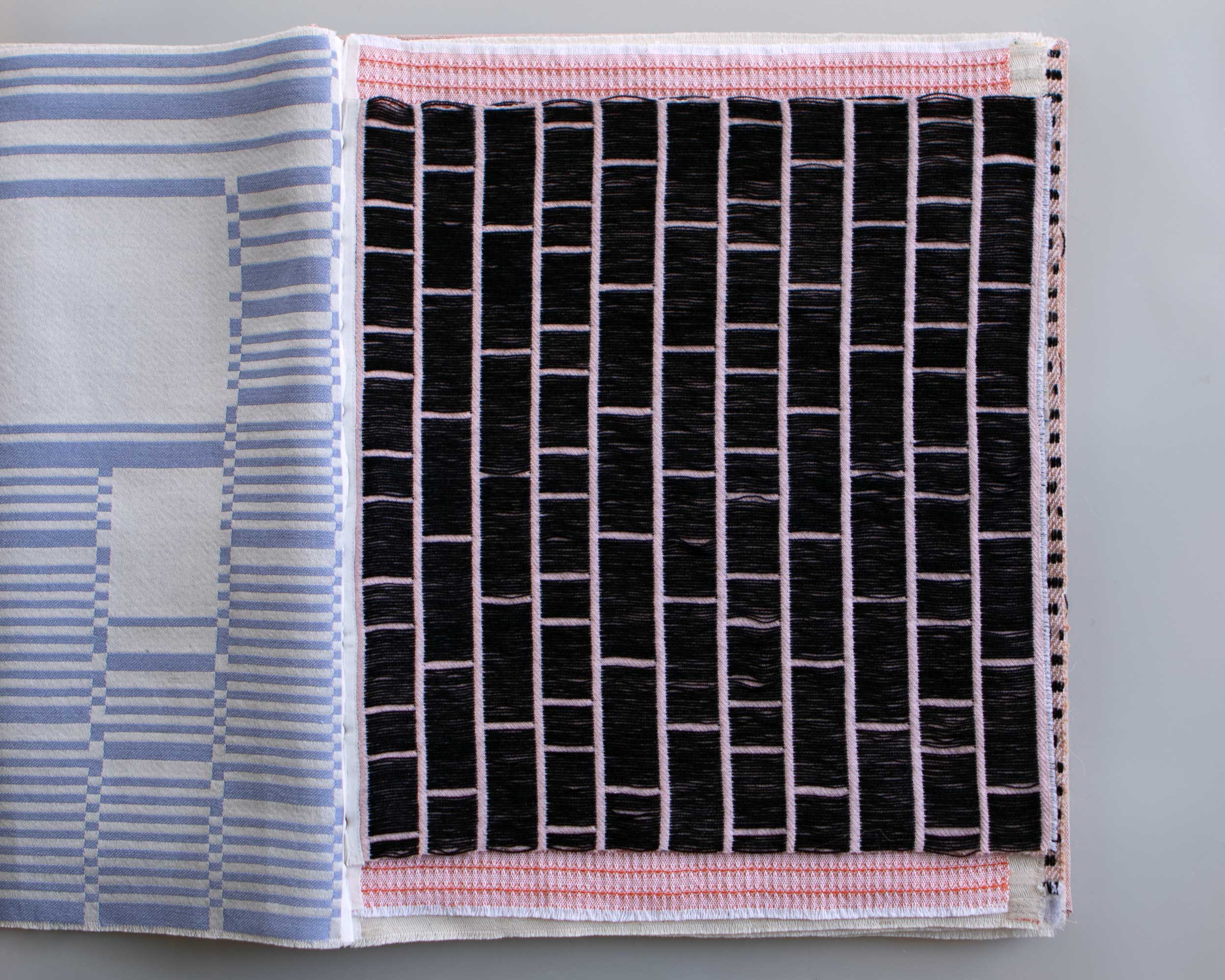
The Centre for Text Margins was founded because the value and new knowledge generated by these and many other examples remained fragmented and unarchived: the diversity and focus exist, but have often been overshadowed by the routines of academic life. The goal of the Centre’s pilot phase is to map these projects and collaborate with Aalto University Archives so we can make them public for those interested and preserve them for future generations. This consolidating work also helps us form a holistic picture of the center’s expertise and of our plans, needs, and the most pressing questions we should address in the coming years.
The Centre for Text Margins is a significant initiative, as it is the very first large-scale effort to make typographic knowledge visible and available within Finland’s academic community, at a remove from commercial interests. In the pilot phase we are surveying existing work, but in founding the center we also have in view a set of thorny, long-term challenges the center is committed to advancing:
Reading skills and text accessibility:
How can we better account for the role of visual text design in reading and literacy, especially as the number of neurodivergent readers grows (estimated at around 10% of the population)?
Multilinguality:
When publishing multilingual texts – combinations of different languages and writing systems – how can we make them as meaningful, high quality, and accessible as possible, while minimizing Eurocentric bias?
Visual/auditory reading:
What phenomena shape the visual design of text in the era of audiobooks and podcasts? How can these modes support one another, and to what extent are they fundamentally different?
Writing tools:
Even though digital and animated, “liquid” texts are nearly mainstream, why do our tools for writing and designing text still rely on static practices inherited from the age of print?
AI and text design:
At least for now, AI tools tend to separate text and visuality into distinct categories and fail to recognize the design of text: cultural conventions still require human interpretation. What are the possibilities for AI to recognize the visual characteristics of text, or to create them in ways that are meaningful for humans?
To conclude, a centre devoted to margins is a clever play on words, but it is also a distinctly wilful decision to commit to working within tensions. Our work is guided by the productive frictions between image and text; practice and theory; content and form; materiality and discourse. It is in these in-between spaces we feel most at home.
The Centre for Text Margins warmly thanks the Kone Foundation for its support and commitment to advancing text design practice and the diversity of written language.